📖 Introduction & Why This Book Matters
In Jennifer Egan's Pulitzer Prize-winning masterpiece, the central antagonist isn't a mobster or a monster—it is Time itself. A Visit from the Goon Squad is a haunting meditation on entropy, survival, and the bittersweet reality of aging. It asks what happens when the rebellious punk rockers of our youth inevitably age into the corporate establishment they once despised. This book matters because it captures the universal vulnerability of the human condition, challenging us to look at the scars of our past. It brilliantly explores the tension between succumbing to the relentless passage of time and claiming the agency required to forge our own authentic connections in a fractured world.
✍️ Plot Summary
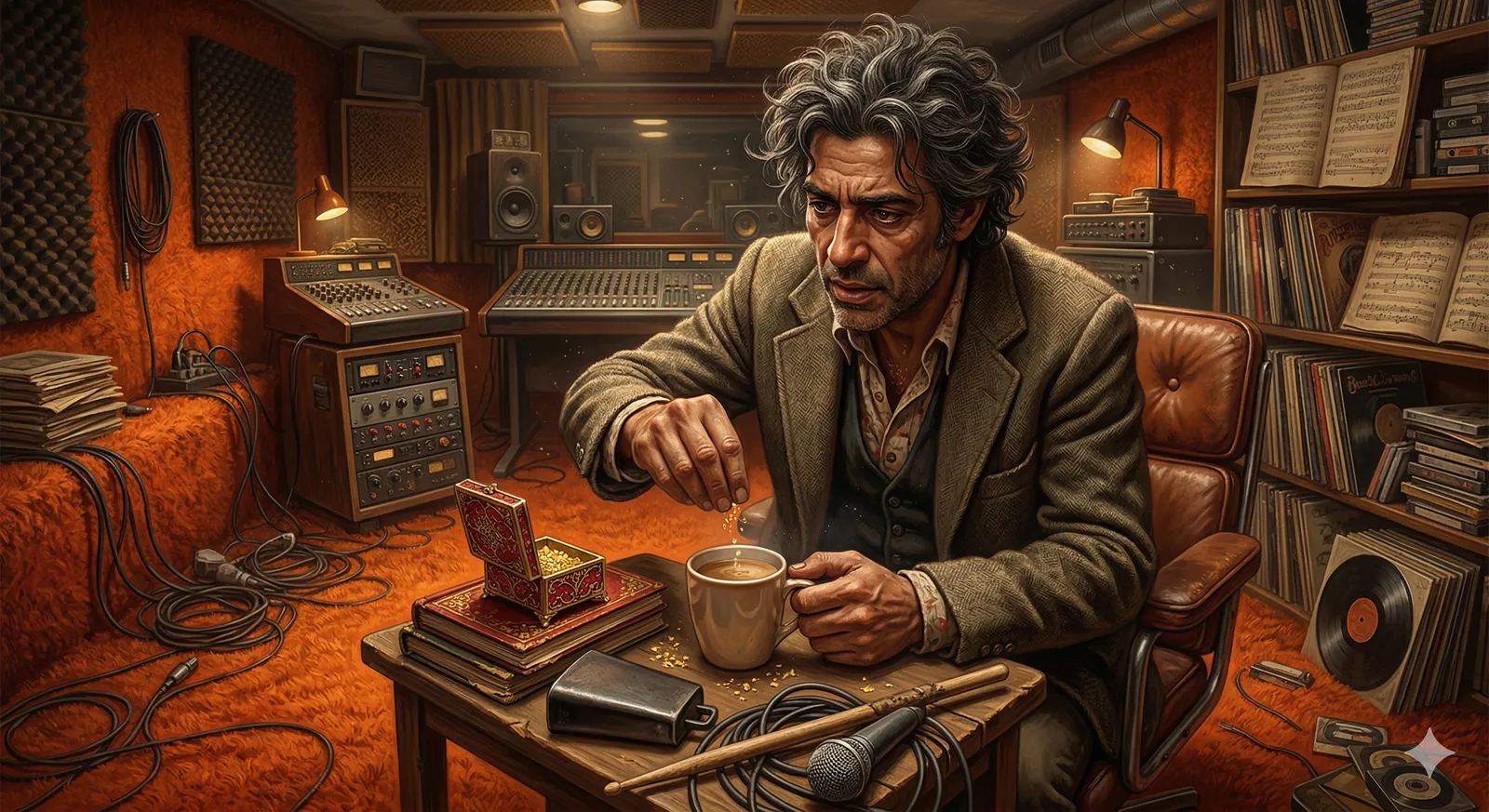
The story opens in a New York City hotel as Sasha impulsively gives in to her compulsion to steal a stranger's wallet. This thrilling act of theft introduces her intense psychological struggles and sets the stage for her ongoing effort to overcome the scars of a traumatic youth. At the same time, Bennie is navigating his own midlife disillusionment; struggling with a vanished sex drive and feeling entirely burned out by the corporate music industry, the founder of Sow's Ear Records resorts to secretly drinking coffee laced with gold flakes in a desperate attempt to revive his lost vitality.
From this focal point, the novel spirals outward in both time and perspective, jumping back to the grit of the 1970s San Francisco punk rock scene. Here, we meet Bennie in his youth, playing bass for a band called the Flaming Dildos alongside his fiercely independent best friend, Scotty Hausmann. We are also introduced to their friends Rhea and Jocelyn, the latter of whom becomes tragically entangled with a charismatic but predatory older music producer named Lou Kline. Lou’s unchecked narcissism leaves a trail of collateral damage, profoundly affecting his young lovers and his own children, Rolph and Charlie, whose lives unravel following a tense African safari.
As the years relentlessly advance, the characters’ paths diverge and unexpectedly crash back together. We follow disgraced publicist Dolly Peale as she attempts to salvage her ruined career by rehabilitating the image of a genocidal dictator, using a traumatized starlet named Kitty Jackson as a PR prop. We witness the unraveling of Jules Jones, a bipolar celebrity journalist whose impulsive assault on Kitty ends his career and lands him in prison. And we see the uncompromising Scotty Hausmann drop out of society to work as a city janitor, only to make a surprising, redemptive musical comeback orchestrated by Bennie.
Ultimately, the story stretches into a dystopian near-future New York that, when read from the vantage point of 2026, feels eerily prescient. Though published back in 2010, Egan's vision of a society where technology reigns supreme, toddlers purchase music on "handsets," and blind teams of paid "parrots" generate fake word-of-mouth marketing has become a chilling reflection of our modern reality. Through shifting voices and fractured timelines, the novel weaves a breathtaking tapestry of ambition, failure, and survival, challenging the reader to piece together the tragic and beautiful trajectories of these unforgettable survivors.
💡 Key Takeaways & Insights
Time is the Ultimate Antagonist The titular "goon" is a personification of Time itself, introduced when the aging rocker Bosco remarks, "Time's a goon, right? You gonna let that goon beat the shit out of you?" It acts as a predatory force that inevitably strips the characters of their youth, innocence, and punk-rock ideals.
The Interconnected Fabric of the Universe Through fragmented storytelling and time switching, main characters in one chapter seamlessly become background characters in others. This zooming out provides vital context, revealing that events which feel random or terrible in the moment are part of a larger, interconnected web of generational trauma and survival.
The Scars of Exploitation The novel unflinchingly examines how powerful, older men in the entertainment industry inflict lasting psychological devastation on the vulnerable. Lou Kline's grooming of the teenage Jocelyn and the emotional neglect of his sensitive son, Rolph, demonstrate the tragic, permanent collateral damage of unchecked narcissism.
The Erosion of Authenticity As the music industry evolves from the raw rebellion of 1970s San Francisco to a digitized, corporate near-future, characters struggle to maintain their "atavistic purism." The book highlights the tension between genuine artistic expression and a commodified world where even interpersonal influence is bought and sold.
🤯 The Most Interesting or Unexpected Part
One of the most remarkable and unexpected elements of the book is Chapter 12, which is presented entirely as a PowerPoint slide deck. Written by Sasha and Drew's twelve-year-old daughter, Alison, the slides serve as her "slide journal" documenting her family's life in the California desert. Through this sterile, corporate format, Alison movingly analyzes complex family tensions and chronicles her autistic brother Lincoln's deep obsession with the pauses in rock songs. It brilliantly subverts traditional literary tropes by proving that emotional depth and profound tragedy can be conveyed through the unlikeliest of mediums.
🏛️ How This Book Applies to Real Life
If you liked fragmented storytelling spanning generations and tracking the subtle interconnectedness of human lives in Cloud Atlas by David Mitchell or Station Eleven by Emily St. John Mandel, then you will love the brilliant time-switching narrative structure and shifting character perspectives about A Visit from the Goon Squad.
This novel applies to real life through its exploration of accountability and healing. Just as Sasha fights to overcome her past traumas in Naples and build a redemptive life as a mother and sculptor, real-life survivors of addiction and exploitation must navigate the ghosts of their memories to find peace. The novel proves that while our past shapes us, we retain the power to reinvent our futures.
Who should read A Visit from the Goon Squad?
Fans of ambitious, character-driven literary fiction that abandons linear chronology for experimental structures.
Readers who appreciate deep dives into the evolution of the music industry, from analog punk to digitized marketing.
Anyone who loves explorations of survival, the lingering weight of generational trauma, and the bittersweet reality of aging.
📚 Final Rating
4.4 / 5 stars
I absolutely love the fragmented, time-hopping structure of this novel, particularly how a protagonist in one chapter seamlessly becomes a background character in the next. This format brilliantly allows the reader to explore the far-reaching implications of generational trauma and the interconnected fabric of the universe. While events may feel random or devastating as they occur in the present moment, Egan’s zoomed-out perspective provides profound context for the wider trajectories of these lives. Ultimately, this book cements me as a massive fan of Jennifer Egan's work.
🎯 Should you read it? Yes, absolutely. However, readers who prefer linear, traditional plotlines might find the shifting perspectives and time jumps challenging to follow at first.
🔥 Final Thought: While the novel posits that time is a "goon" out to dismantle our youth, the true takeaway might just be that despite our traumas, we hold the agency to shape our own redemption. Egan's masterful storytelling makes this an unforgettable read.
Discussion Topics
- The Metaphor of the "Goon" vs. Personal Agency Aging rocker Bosco introduces the central metaphor of the novel when he says, "Time's a goon, right?" Time acts as an enforcer that strips people of their youth, ideals, and dreams. However, some characters actively break out of their destructive cycles.
Discussion Questions: How do different characters, like Bennie or Sasha, attempt to fight back against the "goon" of time? Do you agree with Bosco's assessment of time, or do the characters actually have more agency in determining their futures than they believe? How does Egan's non-linear narrative structure make the "beating" of time feel more sudden and brutal to the reader?
- Authenticity vs. Selling Out The novel heavily explores the concept of authenticity, from the "atavistic purism" of youth to the corporate compromises of adulthood. In the final chapter, Alex is hired to recruit "parrots" to generate fake, paid word-of-mouth marketing.
Discussion Questions: How does the novel define "purity" in art and life, particularly through characters like Scotty Hausmann? Do you agree with Lulu's assessment that "selling out" is a concept based on a flawed, calcified morality? Is true, authentic human connection still possible in the heavily commodified, digitized world depicted in the novel's final chapter?
- The PowerPoint Chapter In Chapter 12, twelve-year-old Alison Blake uses a literal PowerPoint presentation to document her family's life in the desert and her brother Lincoln's obsession with rock and roll pauses.
Discussion Questions: Why do you think the author chose a sterile, corporate presentation tool to convey such profound family emotion and tension? What do Lincoln's "pauses" symbolize in the broader context of the novel and its themes of time and silence? Did reading a chapter in slide-deck format make you feel more distanced from the characters, or more intimately connected to their struggles?
- The Erosion of "Atavistic Purism" and the Concept of Selling Out
Throughout the novel, characters wrestle with the tension between maintaining artistic or personal authenticity and compromising those ideals for success or survival. This tension is directly debated in the final chapter between Alex, who is uneasy about secretly hiring paid "parrots" to generate fake word-of-mouth marketing, and Lulu, Bennie's young assistant. When Alex argues that traditional labor is acceptable because it is "up front" and "out in the open," Lulu counters that this worldview is outdated. She refers to his mindset as
"atavistic purism"
(AP), stating: "AP implies the existence of an ethically perfect state, which not only doesn’t exist and never existed, but it’s usually used to shore up the prejudices of whoever’s making the judgments." Lulu dismisses concepts like "being bought" or "selling out" as mere "disingenuous metaphors" based on a "calcified morality," highlighting a sharp generational divide between the nostalgic punks of the 1970s and the digitized, post-ironic youth of the near future.
Discussion Questions: Do you agree with Lulu's assessment that an "ethically perfect state" never existed, and that accusing someone of "selling out" is just a way to shore up personal prejudices? Or is there still value in Alex's desire for things to be "up front" and "out in the open?"
Discussion
Comments are moderated and will appear after review by the site owner.
No comments yet. Be the first to share your thoughts!