The Shadow of What Was Lost, The Licanius Trilogy (Book 1), by James Islington
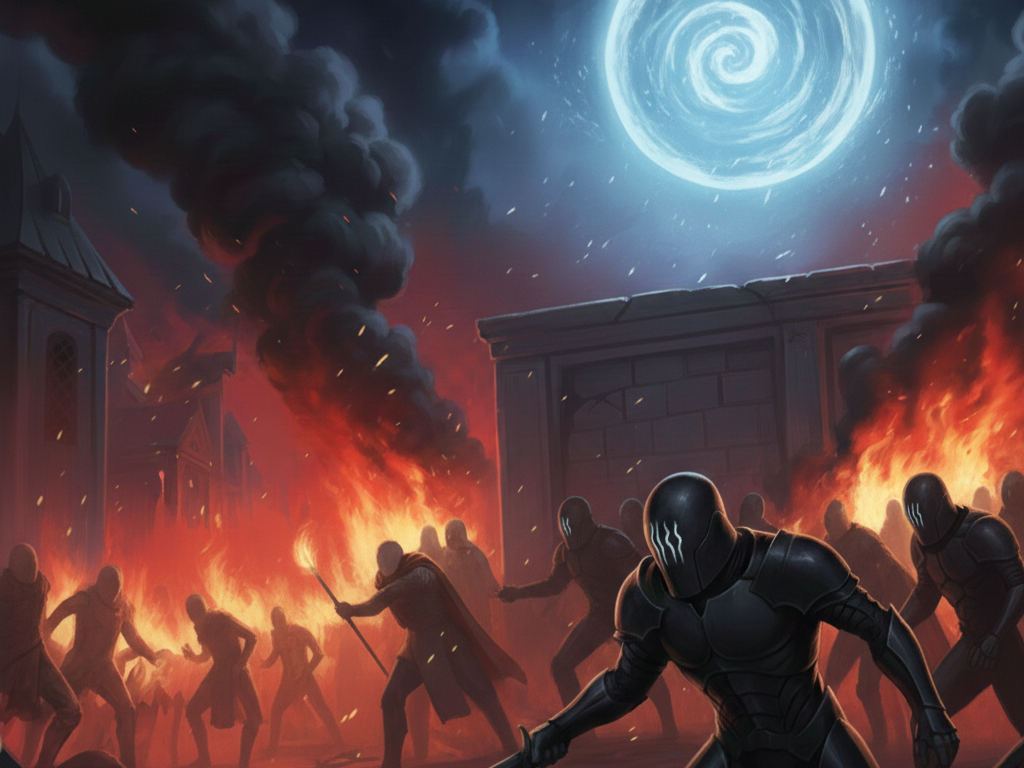
The blind sack Ilin Illan.
Content Rating
Rating: CSR-4 (Explicit & Dark Themes – Adult Readers Only)
Content Warnings:🩸 Violence/Torture, ⚰️ Death & Grief, 🧠 Mental Health (Identity/Memory Loss, Trauma)
While the book contains high fantasy adventure, it receives a CSR-4 due to instances of graphic violence and disturbing themes that go beyond standard teen fare. The narrative includes a brutal massacre of students at a school, described with imagery of severed heads and throats torn out. There are scenes of torture, including a finger being magically split apart, and the transformative process of becoming a “Shadow” involves agonizing convulsions and physical disfigurement. The presence of “Echoes”—corpses reanimated to kill their loved ones—adds a layer of psychological horror to the violence.
📖 Introduction & Why This Book Matters
The Shadow of What Was Lost is a high fantasy epic that feels both nostalgic and refreshingly complex. It evokes the sprawling scope of The Lord of the Rings with the political machinations of Game of Thrones, offering a world where history is not just a backdrop, but a weapon. The story immerses you in a society built on the ruins of a forgotten war, where the “Gifted”—those capable of wielding the magical force known as Essence—are subjugated by the non-Gifted Administration and bound by ironclad laws called the Tenets.
This book matters because it explores the terrifying fragility of truth. It asks what happens when a society is built on lies about its past, and what happens to individuals when their own memories are stripped away. It is a story about the tension between destiny and free will, asking whether we are defined by our past actions or our present choices. For readers who crave a magic system that feels like a science—distinguishing between internal Essence and the external manipulation of kan—this novel provides a deeply satisfying intellectual crunch alongside its emotional beats.
✍️ Plot Summary
Davian is a student at a school for the Gifted, struggling to pass his Trials. In the land of Andarra, failure means more than expulsion; it means being stripped of one’s magic and humanity to become a “Shadow”—a broken, subservient vessel. But Davian holds a dangerous secret: he can detect lies, a power associated with the long-dead and reviled Augurs.
When the mysterious Elder Ilseth Tenvar reveals that the magical Boundary protecting the north is failing, Davian is entrusted with a peculiar bronze box and forced to flee before he is turned into a Shadow. He is joined by his loyal friend Wirr, and their path soon crosses with the enigmatic, scarred Taeris Sarr and a young man named Caeden, who is wanted for a massacre he cannot remember committing.
Meanwhile, back in the capital of Ilin Illan, Davian’s friend Asha is left to navigate the treacherous political currents of the palace after surviving a brutal attack on their school. As an ancient enemy known as the Blind descends from the north, wearing armor that drinks the light, these scattered friends must unlock the secrets of the past to prevent the annihilation of their future.
💡 Key Takeaways & Insights
1. Identity is a Choice, Not Just a Memory The character of Caeden serves as a profound exploration of identity. Suffering from total amnesia, he is horrified by accusations of mass murder. He struggles with the fear that regaining his memories might reveal he is a monster. However, his journey suggests that who we are is defined by our current actions—saving his friends, protecting the innocent—rather than the person we used to be.
2. History is Written by the Fearful The world of Andarra is shaped by the fear of the Gifted. The Administration enforces the Tenets not necessarily out of justice, but out of a terror born from the Unseen War. The narrative reveals that the history taught to the characters is often a manipulation of the truth. For example, the accepted history that the Augurs failed and were tyrants is challenged by the revelation that they may have been tricked by a greater power.
3. Loyalty in the Face of Despair Despite the grim circumstances, the bond between the protagonists drives the plot. Wirr abandons a life of safety to ensure Davian doesn’t face exile alone. Asha, despite being turned into a Shadow and treated as less than human, works from within the palace to secure weapons for the city’s defense, proving that loyalty persists even when hope seems lost.
🤯 The Most Interesting or Unexpected Part
The most mind-bending aspect of the book is Davian’s journey into the ruined city of Deilannis. While fleeing monsters called sha’teth, Davian inadvertently activates an ancient mechanism called a Jha’vett and is transported seventy years into the past. Here, he meets Malshash, a shape-shifting Augur who trains him in the use of kan—a power distinct from Essence that allows for the manipulation of energy and time. This sequence reframes the entire narrative; it reveals that Davian’s survival and skills were not accidental but engineered by a version of Malshash who had met Davian in the future. The realization that Davian is technically “dead” in his own timeline, sustaining himself by drawing Essence from his surroundings like a vacuum, fundamentally changes the stakes of his survival.
🏛️ How This Book Applies to Real Life
Prejudice and Control: The treatment of the Gifted and Shadows mirrors real-world systemic discrimination. The Shadows are physically marked, segregated, and viewed with suspicion or disgust by the general populace. The book illustrates how laws (the Tenets) can be used to institutionalize oppression under the guise of public safety.
The Weight of Leadership: Through Wirr, we see the burden of inheritance and leadership. He must reconcile his secret identity as a prince with his reality as a Gifted, eventually taking on the responsibility of rewriting the very laws that oppress his people to save the city.
Who should read The Shadow of What Was Lost?
Fans of “hard magic” systems where magic follows strict rules (like Brandon Sanderson’s works).
Readers who enjoy multi-POV narratives and political intrigue.
Anyone fascinated by time travel mechanics woven into fantasy.
📚 Final Rating 4.5 / 5 Stars
This is a rich, complex high fantasy that rewards careful reading. The world-building is top-tier, rivaling genre giants with its intricate history and magic system. While the sheer volume of lore and the density of the plot can be overwhelming, the emotional payoff of the characters’ interlinked destinies makes it a standout debut.
🎯 Should you read it? Yes. If you are willing to commit to a dense, sprawling narrative that requires you to pay attention to every detail, this book is incredibly rewarding. It is not a light read, but it is a compelling one.
🔥 Final Thought In a world where memories can be erased and history rewritten, The Shadow of What Was Lost reminds us that while we cannot change where we came from, we must fight for where we are going.
