Tomorrow, and Tomorrow, and Tomorrow by Gabrielle Zevin
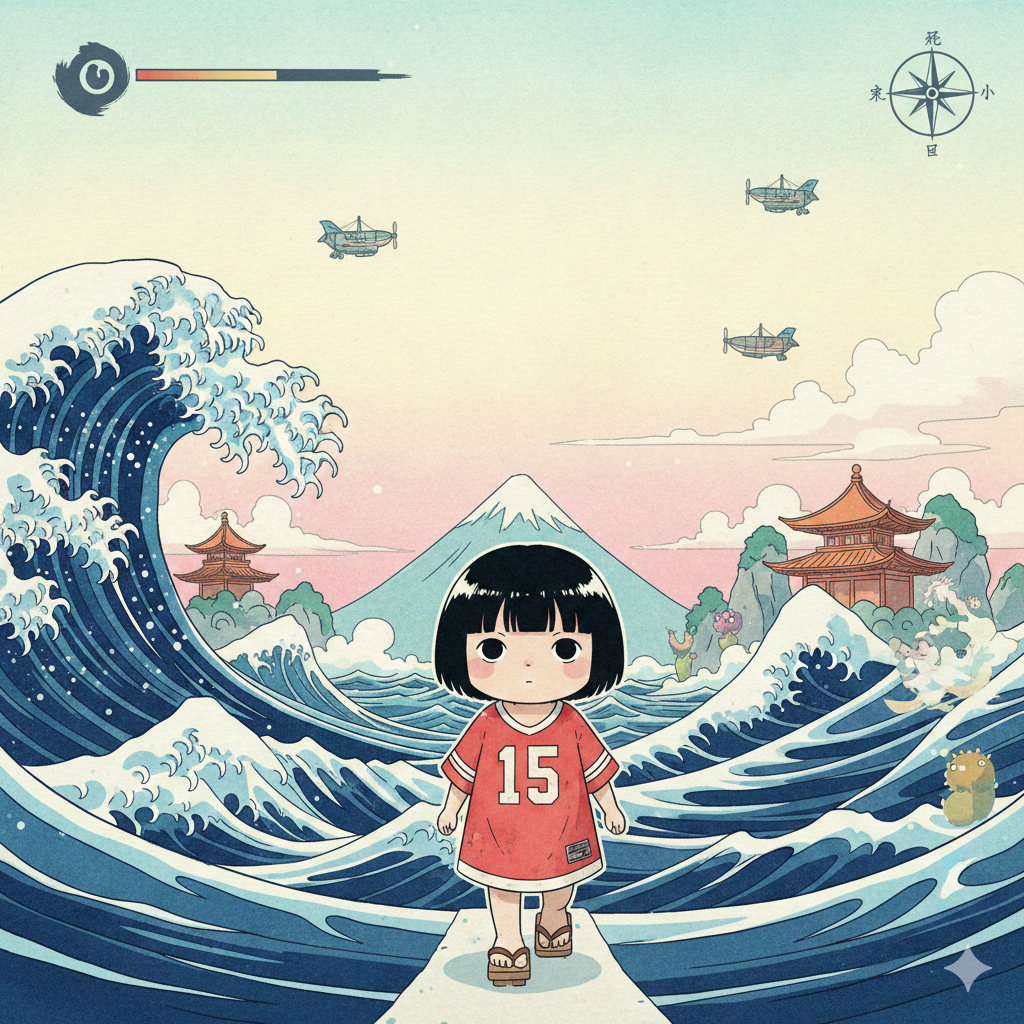
Sam and Sadie’s first game, Ichigo, that launched their careers.
Content Rating
🔴 CSR-4: Explicit & Dark Themes – Adult Readers Only
Content Warnings (CW): 🩸 Violence/Torture, ⚰️ Death & Grief, 🚨 Sexual Assault, 💔 Suicide/Self-Harm, 💊 Addiction/Substance Abuse, 🧠 Mental Health, 🏳️🌈 LGBTQ+ Themes
The narrative includes a graphic depiction of a workplace mass shooting that results in critical injury and death. It portrays an abusive, power-imbalanced sexual relationship involving bondage and non-consensual elements between a professor and a student. Additionally, the book deals heavily with chronic physical pain, amputation, suicide, and profound grief.
📖 Introduction & Why This Book Matters
“To allow yourself to play with another person is no small risk,” writes Gabrielle Zevin. “It means allowing yourself to be open, to be exposed, to be hurt”. Tomorrow, and Tomorrow, and Tomorrow is not really a story about video games; it is a sprawling examination of the intimacy of collaboration. It posits that the shared act of creation—building worlds together—can be more profound and enduring than romance.
This book matters because it validates the medium of video games as high art, capable of expressing the deepest human truths: love, loss, and the desire for redemption. It explores the concept that while life is often unfair and final, games offer us “infinite rebirth, infinite redemption”. Through the decades-spanning relationship of its protagonists, the novel asks us to consider what it means to truly know another person, and whether we can ever forgive them for their flaws.
✍️ Plot Summary
Sam Masur and Sadie Green first bond as children in a hospital gaming room, where Sam is recovering from a shattered foot and Sadie is visiting her sister. Years later, they reconnect on a subway platform in Cambridge, Massachusetts, sparking a creative partnership that will define their lives.
With the help of Sam’s charismatic roommate, Marx Watanabe, they launch Ichigo, a game inspired by the artwork of Hokusai and the tragedy of a lost child. The game becomes a global phenomenon, propelling them from college students to wealthy industry titans. However, as they move their company, Unfair Games, to Los Angeles, the pressures of fame, artistic ego, and unspoken resentments threaten to tear them apart.
From the creative highs of building the virtual utopia Mapleworld to the devastating lows of a workplace tragedy that changes everything, Sam and Sadie navigate a relationship that is neither romance nor friendship, but something deeper and more painful. They must ultimately decide if they can keep playing the game of life together, even after “Game Over.”
💡 Key Takeaways & Insights
Grief is a level without a skip function The characters use gaming metaphors to process trauma because reality is often too painful to face directly. Sam views his body as a “flesh bag with bone chips” and prefers the invincibility of an avatar. When tragedy strikes, such as the death of a beloved character, the survivors struggle because, unlike in a game, there is no restart button. The narrative suggests that grief is the one level you cannot skip; you must play through it.
Creation is an act of love (and war) The collaboration between Sam and Sadie is depicted as a marriage of minds. However, Zevin illustrates that creative ownership is messy. While Sadie does the heavy lifting of coding and engine building, Sam often receives the public credit as the “face” of the games. This dynamic highlights the tension between the invisible labor of creation and the public performance of genius.
The “NPCs” are the heroes While Sam and Sadie view themselves as the protagonists, the book argues that the “Non-Player Characters” (NPCs) are the glue holding the world together. Marx Watanabe, often dismissed by Sam as a “tamer of horses” or an NPC because of his stability, is revealed to be the essential force that allows the “geniuses” to function. Without the NPC, the hero has “no one to talk to and nothing to do”.
Virtual worlds can heal real wounds The book argues that virtual spaces allow for a “utopian vision” where people can be their better selves. In the game Pioneers, Sam and Sadie are able to interact as “Dr. Daedalus” and “Emily,” stripping away their baggage to rediscover their love for one another. The virtual world offers a safety that the real world, with its car accidents and shooters, cannot.
🤯 The Most Interesting or Unexpected Part
The most structurally fascinating section of the book occurs within the game Pioneers. Following a devastating tragedy that leaves the characters estranged, the narrative shifts entirely into an MMORPG (Massively Multiplayer Online Role-Playing Game) set in the Old West. For chapters, the reader follows “Emily” (Sadie) and “Dr. Daedalus” (Sam) as they build a life in a virtual town called Friendship. It is a quiet, domestic existence involving farming and playing Go, devoid of the bitterness of their real lives. The twist lies in the revelation that Sam built this entire world specifically to lure Sadie back from her depression, creating a safe harbor where she could heal without the pressure of their real-world identities. It is the ultimate act of love—not a grand romantic gesture, but the coding of a quiet space where his friend could simply be.
🏛️ How This Book Applies to Real Life
Workplace Dynamics: The book offers a stark look at the gender disparities in the tech industry. Sadie struggles to be taken seriously as a female coder, while Sam is hailed as a visionary.
Coping with Disability: Sam’s struggle with his foot, chronic pain, and eventual amputation provides a visceral look at living with disability. It challenges the toxic positivity of “fighting” illness, acknowledging that sometimes survival is just endurance.
The Nature of Success: It questions the value of commercial success versus artistic integrity, a conflict every creative professional faces.
Who should read Tomorrow, and Tomorrow, and Tomorrow?
Lovers of Normal People by Sally Rooney, Daisy Jones & The Six by Taylor Jenkins Reid, or The Animators by Kayla Rae Whitaker
Gamers and game designers.
Anyone interested in the complexities of long-term platonic love.
Creatives who work in collaborative partnerships.
Readers who enjoy multi-generational sagas.
📚 Final Rating: 4.8/5 Stars
Gabrielle Zevin’s Tomorrow, and Tomorrow, and Tomorrow is a storytelling triumph that functions as both a sophisticated literary achievement and a deeply engaging page-turner. The narrative masterfully illustrates the passion, conflict, and vulnerability inherent in the creative process, translating the complexities of game development into a story that is profoundly moving and easy to connect with.
🎯 Should you read it? Yes — as of yesterday, and yesterday, and yesterday. Even if you have never played a video game, this book’s ethereal writing style and fantastic storyline will captivate your attention and tug at your heart. The language of gaming is simply how Zevin explores universal themes of connection, time, and forgiveness. However, readers should be prepared for heavy emotional content, including a jarring depiction of gun violence that fundamentally alters the story’s trajectory.
🔥 Final Thought Life is the ultimate unfair game—there are no extra lives, and the difficulty settings are hidden—but as Marx Watanabe reminds us, “tomorrow, and tomorrow, and tomorrow” offers the “possibility of infinite rebirth,” if only we are brave enough to keep playing.
