BOOK REVIEW OF
A Court of Silver Flames
ACOTAR Series (Book 4)
Sarah J. Maas
Reviewed by Ella Law (with Gemini & NotebookLM)
Published February 7, 2026
Table of Contents
Content Rating
🔴 CSR-4 (Explicit & Dark Themes – Adult Readers Only)
Content Warnings: 🩸 Violence/Torture, 🚨 Sexual Assault, 🧠 Mental Health, 💋 Explicit Sex Scenes, ⚰ Death & Grief
The text contains deeply disturbing themes, including a detailed recounting of sexual assault involving a character being held down and raped by soldiers. There are frequent, highly explicit sex scenes, including public acts and rough intimacy described in graphic detail. Violence is visceral, depicting dismemberment, beheading, and creatures that feast on flesh. Furthermore, the protagonist battles severe mental health struggles, including suicidal ideation and alcoholism, often wishing to “not exist anymore”.
📖 Introduction & Why This Book Matters
A Court of Silver Flames is a raw, jagged journey through the darkest valleys of the soul. While it features magic and monsters, the true battleground is the mind of Nesta Archeron. This book matters because it refuses to look away from the ugly reality of trauma. It asks a difficult question: What happens to the hero’s sister who didn’t want to be a hero, who was Made against her will, and who is drowning in guilt? It captures the suffocating feeling of “roaring silence” and the desperate need to numb oneself with drink and sex to avoid the pain of survival. It is a story about clawing your way out of a pit, one step at a time—literally and figuratively.
✍️ Plot Summary
Nesta Archeron is spiraling. Haunted by the horrors of the war with Hybern and the death of her father, she has become a “waste of life,” burying her trauma in wine, gambling, and strangers’ beds. Feyre, High Lady of the Night Court, and Rhysand intervene with an ultimatum: train with the warrior Cassian and work in the library beneath the House of Wind, or be exiled to the human lands.
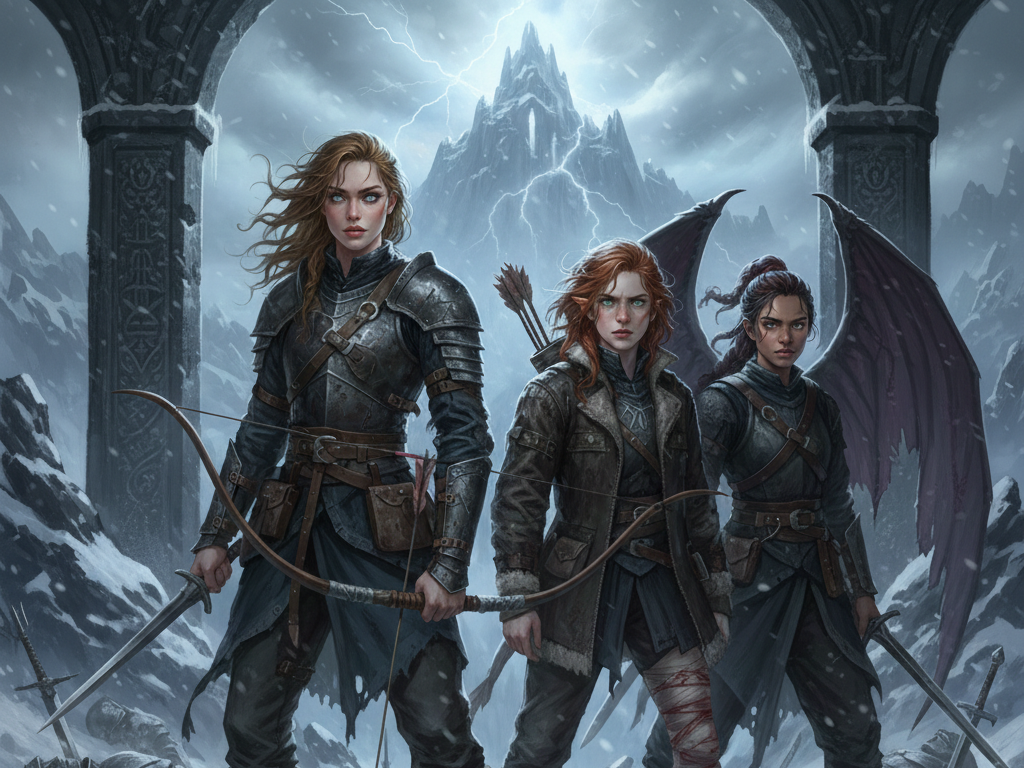
Trapped in the House of Wind, separated from the city of Velaris by ten thousand impossible stairs, Nesta must face her demons. Under Cassian’s tutelage, she begins to train her body, eventually forging a bond with two other survivors—the priestess Gwyn and the Illyrian shopkeeper Emerie. Together, they seek to revive the lost techniques of the Valkyries.
However, peace is fragile. The human Queen Briallyn has allied with the death-lord Koschei and seeks the Dread Trove—three ancient, Made objects of terrible power: the Mask, the Harp, and the Crown. As Nesta unlocks her own strange, silver-flamed power, she must race to find the Trove before Briallyn can use it to enslave the world.
💡 Key Takeaways & Insights
Healing is Non-Linear and Sometimes, Ugly Nesta’s journey isn’t a straight line to happiness. She backslides, lashes out, and hurts those she loves, including her sister Elain. The book illustrates that “forgiveness is not that easy,” especially forgiveness of oneself. The physical act of climbing the House’s 10,000 steps serves as a brutal metaphor for recovery; sometimes you fall, and sometimes you just have to sit on the step and breathe.
“I Am the Rock Against Which the Surf Crashes” This mantra, used in the Valkyrie Mind-Stilling exercises, represents the power of mental fortitude. The characters learn that physical strength is meaningless without mental control. By visualizing their thoughts as surf crashing against them, they learn to acknowledge their trauma without being swept away by it, turning their minds into weapons as sharp as their blades.
Trauma Can Be a Binding Force Nesta, Emerie, and Gwyn are all survivors of distinct horrors—domestic abuse, sexual assault, and the trauma of war. Yet, they do not let these tragedies define them as victims. Instead, they forge a sisterhood in the blood and sweat of the training ring. They prove that “nothing can break us” when they stand together, transforming their pain into the unbreakable bond of the Valkyries.
Power Without Control is Dangerous Nesta creates a new Dread Trove—a sword, dagger, and great sword—simply by pouring her unchecked emotion and power into the metal. This highlights that raw power, driven by rage and grief, can manifest in terrifying ways. It is only when she learns to control her breathing and her mind that she can wield her power to save rather than destroy.
🤯 The Most Interesting or Unexpected Part
The most unexpected element is the sentience of the House of Wind. It becomes Nesta’s first true friend after she unknowingly “Makes” the house with her magic. It anticipates her needs, providing romance novels, baths, and food when she refuses to care for herself. In a moment of profound connection, Nesta realizes the House has a “heart of darkness” in the library pit, mirroring her own broken soul. The House eventually actively participates in her life, even hosting a slumber party for Nesta, Gwyn, and Emerie, complete with bubbles and miniature pegasuses. This detail symbolizes the way we can cling to life unknowingly, in the midst of depression, even when we don't know how to care for ourselves, by the simple act of wanting. Wanting a friend. Wanting a book. Wanting anything at all. Allowing yourself to want can be the first step out of the dark.
🏛️ How This Book Applies to Real Life
This book serves as an allegory for PTSD and the struggle to recover self-worth. It connects to the real-world difficulty of female autonomy in patriarchal societies, shown through the Illyrian practice of “wing clipping” to control women.
Who should read this?
Survivors: Anyone who has felt broken by their past and needs to see a path forward.
Romance Readers: Those who enjoy the “enemies-to-lovers” trope with high stakes and high heat.
Fantasy Fans: Readers who want character-driven stories where the internal battle is just as deadly as the external war.
📚 Final Rating: 4.3/5 Stars
Beyond the internal emotional journey, the main storyline delivers thrilling entertainment as Nesta hunts for the Dread Trove. The climax of the book is particularly gripping, as Nesta, Gwyn, and Emerie are thrown into the brutal Blood Rite, forcing them to rely on their Valkyrie training and sisterhood to survive against impossible odds. From saving Cassian to holding the line at the Pass of Enalius, Nesta proves herself a true hero.
While Nesta is a difficult, abrasive protagonist, her transformation from a woman who sees herself as a “waste of life” to a warrior who halts Time itself to say “I love you” is a masterpiece of character development.
🎯 Should You Read It? Yes, but with caution. If you are sensitive to depictions of sexual violence or graphic depictions of depression, proceed carefully. If you want a story that validates female rage and proves that one can be “made” of death and still choose life, this is essential reading.
🔥 Final Thought Nesta Archeron climbed ten thousand steps not to reach the top of the stairs, but to find the person she was meant to be; proving that even when the world breaks you, you can reforge yourself into something sharper, stronger, and wholly new.