Everyone in the Group Chat Dies by L.M. Chilton
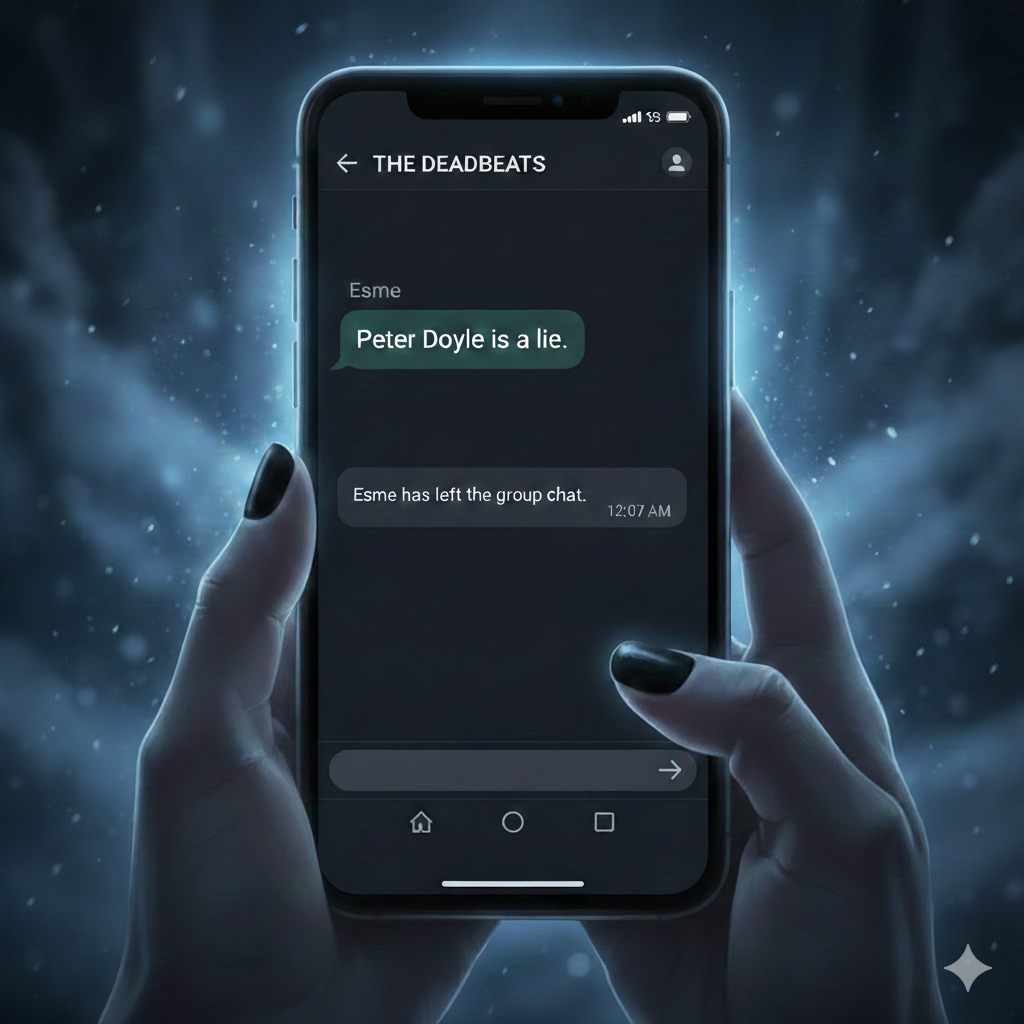
Kirby dissects her new roommate’s cryptic text.
Content Rating
🟡 CSR-3: Teen & YA – Contains Mature Themes
Content Warnings (CW):
🩸 Violence – Murders occur via stabbing and blunt force; a severed hand is discovered; characters are pushed off cliffs.
⚰️ Death & Grief – The plot centers on the murder of a friend group and the historical massacre of teenagers.
💊 Addiction/Substance Abuse – Frequent references to alcohol consumption to cope with stress; drug use (marijuana/bongs) is present.
💔 Suicide/Self-Harm – A central plot point involves a character historically believed to have died by suicide.
💋 Romance & Sexuality – Includes implied sex scenes and “fade-to-black” intimacy.
Based on the “Content Rating Scale,” this book falls firmly into CSR-3. While it deals with a serial killer and murders, the tone is often “lighthearted” and “campy” rather than deeply psychological horror or torture-focused. However, it is not suitable for young children due to the violence and adult lifestyle themes.
📖 Introduction & Why This Book Matters
Everyone in the Group Chat Dies is a satirical, adrenaline-fueled dive into the modern obsession with internet fame, masquerading as a slasher mystery. The book captures the frantic energy of the digital age, where a missing person is an opportunity for content and a tragic history is merely a backdrop for a viral video. Through the eyes of Kirby Cornell, a self-described “hot mess” journalist, the reader is hooked into a world where the line between reporting the news and becoming the story is dangerously blurred. It is a story about the desperation to be seen in a world that scrolls past everything in seconds.
✍️ Plot Summary
Kirby Cornell is an underachieving local journalist living in Flat Four, Stewart Heights, in the sleepy, slightly depressing town of Crowhurst. She shares her chaotic life with three roommates: Dylan, a cynical chef; Seema, a true-crime obsessed dental nurse; and Dave “The Legend,” a man-child who lives for conspiracy theories. Their mundane existence of pizza and Netflix is disrupted when a mysterious and glamorous influencer named Esme rents their box room. Esme arrives with a singular goal: to investigate the “Crowhurst Killer,” Peter Doyle, a spree killer who allegedly massacred teenagers at the town fair thirty years ago before jumping to his death.
However, Esme disappears just days after arriving, leaving Kirby and her friends entangled in a media firestorm that briefly puts Crowhurst back on the map. Fast forward one year: Kirby has fled town, haunted by the events of that summer. But the past refuses to stay buried. A notification pops up on their old WhatsApp group chat from Esme’s number with a chilling message: “Everyone in the group chat dies.” As her former flatmates are picked off one by one, Kirby must return to Crowhurst to uncover who is behind the mask of the town’s mascot, Jack Daw, before she becomes the final victim.
💡 Key Takeaways & Insights
The Internet is the New Crime Scene The book vividly illustrates how modern investigations have shifted from police work to “armchair detectives.” Esme’s followers, “The Watsons,” use crowd-sourced surveillance to solve crimes, identifying locations from background reflections and analyzing pixelated footage. Chilton suggests that while this democratizes justice, it also endangers lives and encourages vigilantism, as seen when Kirby’s followers accuse her of murder based on a curry stain on her shirt.
Viral Fame acts as a drug The narrative explores the corrupting influence of "clout," particularly through Esme’s obsession with turning a local tragedy into viral content. The book critiques a disturbing reality where trauma is monetized and proximity to violence is treated as a commodity to boost follower counts and secure brand deals. Even Kirby admits to wanting a “big comeback” to prove her worth to her father and her boss, using the tragedy to fuel her own redemption arc. This forces the reader to question the ethics of consuming real-life horror as entertainment.
Local News as the Lifeblood of Community A subtle but powerful theme is the death of local journalism. Trevor Phillips, editor of the local paper, laments that the Crowhurst Gazette is being replaced by clickbait aggregators like “Surreywide,” which prioritize “What Your Favorite Pasta Shape Says About You” over local accountability. The book argues that when local papers die, the community loses its identity and its ability to hold power to account—a vacuum that allows monsters (both literal and metaphorical) to thrive.
We Create Our Own Bogeymen The town of Crowhurst effectively canonized Peter Doyle as a legendary monster to boost tourism, turning a “spree killer” into a mascot. The twist reveals that the town needed a villain to feel important. This insight suggests that society is complicit in the glorification of violence because it provides a narrative structure to otherwise senseless tragedies.
🤯 The Most Interesting or Unexpected Part (**SPOILERS**)
For me, the most compelling aspect of the book was the parallel exploration of Kirby and Dylan’s relationships with their fathers. Both characters are defined by the “sins” and absences of their dads, yet they react to these legacies in heartbreakingly different ways.
Kirby Cornell & Jason Dangerfield: Kirby’s life is shaped by the rejection of her father, a famous TV actor. She reveals she was a “marriage-saving baby” who failed to keep her parents together, leading to a life of feeling like a “bad investment.” Her reaction was to clamor for his attention—first by trying to become an actor, then by writing a viral clickbait article titled “I’ll Never Forgive My Famous Dad for Destroying Our Family.” When this backfired and got her fired rather than noticed, she retreated to Crowhurst to hide from her own name. Her arc is one of moving from desperate validation-seeking to realizing the only person’s approval she needs is her own.
Dylan Barnes & Peter Doyle: In a tragic twist, Dylan’s life is shaped by a father he never knew. He grew up believing his dad died of cancer, only to discover that he is the secret son of Peter Doyle, the town’s reviled “bogeyman.” While Kirby’s father was a fake hero, Dylan’s father was a fake villain—an innocent man framed as a monster. Dylan’s reaction is one of fear and protection; he covers up Esme’s death to protect his mother from the shame of having loved a “serial killer.” He fears he has inherited his father's “badness” and wonders if he is just like him. Ultimately, he is like his father—but in the best way. Just as Peter refused to run away because he wouldn’t leave his unborn son, Dylan sacrifices his life to save Kirby, proving it was bravery in his bloodline that was real all along.
🏛️ How This Book Applies to Real Life
This book is a mirror to our current obsession with True Crime consumption. Just as the characters in Crowhurst turn a massacre into a tourist attraction with waxworks and costumes, real-world tragedies are often converted into entertainment for podcasts and Netflix documentaries. The book challenges the reader to consider the ethics of consuming someone else’s trauma as “content.” Furthermore, it highlights the dangers of parasocial relationships and the disconnect between an online persona and reality.
Who should read this?
Fans of Black Mirror who enjoy tech-dystopian satire.
Readers of A Good Girl’s Guide to Murder who want a more chaotic, adult protagonist.
True crime podcast listeners who are willing to question their own hobby.
Anyone who has ever felt like a “hot mess” in their thirties.
📚 Final Rating: 4.2/5 Stars
Everyone in the Group Chat Dies is an entertaining read that effectively interrogates the ethics of true crime consumption. While the final reveal of the killer relies on a somewhat melodramatic villain monologue that stretches plausibility, the journey there is incredibly entertaining. Kirby’s voice is distinct and relatable, and the integration of social media mechanics into the mystery feels organic rather than gimmicky.
🎯 Should you read it? Yes. If you enjoy fast-paced thrillers that don’t take themselves too seriously and offer a biting commentary on influencer culture, this is for you.
🔥 Final Thought In a world where we document every moment, this book leaves you with a chilling reminder: sometimes, the only thing more dangerous than being invisible is being watched by everyone.
