BOOK REVIEW OF
A Court of Thorns and Roses
ACOTAR Series (Book 1)
Sarah J. Maas
Reviewed by Ella Law (with Gemini & NotebookLM)
Published February 2, 2026
Table of Contents
Content Rating
CSR Rating: 🔴 CSR-4
Content Warnings: 🩸 Violence/Torture, ⚰️ Death, 🚨 Sexual Assault, 🧠 Mental Health, 🛐 Sexual Content (beyond “fade-to-black”)
The rating is justified by the shift in the final third of the book, which takes place “Under the Mountain.” Here, the protagonist is subjected to brutal beatings until her bones break, forced to perform tasks involving murder, and witnesses the mutilated corpses of others. Additionally, the sexual relationship between Feyre and Tamlin becomes explicit, moving the book firmly out of the typical YA range.
📖 Introduction & Why This Book Matters
A Court of Thorns and Roses is not a simple retelling of Beauty and the Beast; it is a visceral exploration of survival, duty, and the terrifying cost of love. Maas establishes a brutal hierarchy where humans are physically fragile and destitute, living in the shadow of former masters who view the wall separating them not as a permanent boundary, but as a temporary inconvenience. The narrative matters because it strips away the sanitized veneer of the “fair folk.” The faeries here are lethal predators, and the protagonist, Feyre, is not a princess waiting to be saved, but a huntress covered in blood and dirt, driven by a grim resolution to keep her family alive. It explores the psychological toll of poverty and the desperation that drives a human to kill—and eventually, to love—even if the recipient is something she was taught to hate.
✍️ Plot Summary
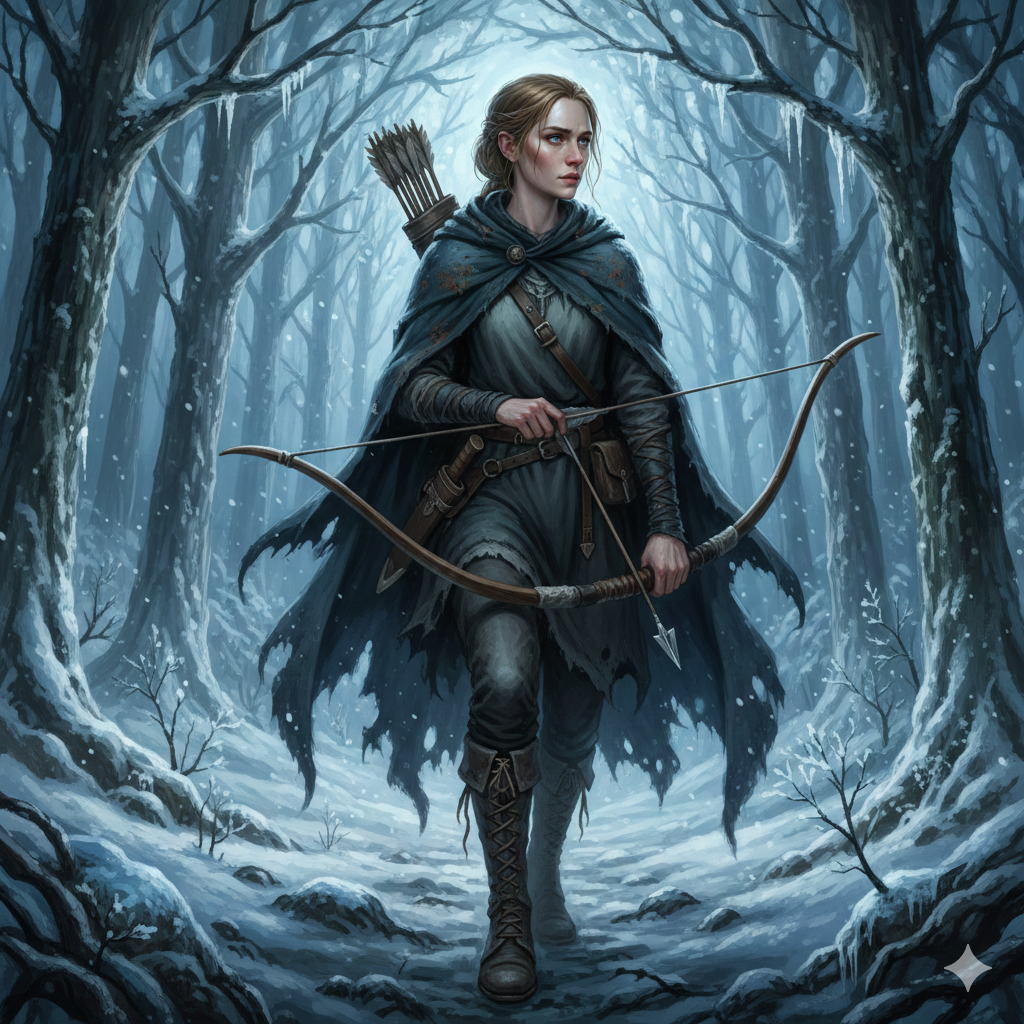
Nineteen-year-old Feyre is a huntress in a frozen, bleak human village, carrying the weight of her family’s survival on her shoulders. In a desperate bid to feed her father and sisters, she kills a massive wolf in the woods, using a rare ash arrow to ensure the kill. But the wolf was no ordinary animal; it was a faerie sentry from the lands of Prythian.
Retribution arrives in the form of a terrifying beast who storms Feyre’s cottage, demanding a life for a life. Bound by an ancient Treaty, Feyre is dragged across the wall to the Spring Court—a land of eternal spring, lethal magic, and terrifying creatures. Her captor is Tamlin, a High Lord of the Fae who is forced to wear a mask due to a mysterious “blight” sapping the magic of his lands.
Imprisoned in a sprawling manor, Feyre discovers that everything she knew about the fae was a lie. As she navigates a world of shapeshifters, invisible monsters, and court politics, her hatred for Tamlin transforms into a burning passion. But a shadow is growing over Prythian. The blight is not a sickness, but a person: a sorceress named Amarantha who holds the High Lords in thrall. To save Tamlin and his court, Feyre must face an impossible darkness deep within the earth, where she will risk her heart, her soul, and her humanity.
💡 Key Takeaways & Insights
1. Survival creates a specific kind of trauma Feyre begins the story defined by her ability to kill and provide. Even when given luxury, she cannot shed her survivalist instincts, hoarding weapons and mapping escape routes. The text illustrates how poverty hollows a person out, making them view beauty as “useless” compared to food. It is only through painting that Feyre begins to process her trauma and reclaim her identity beyond just being a provider.
2. The masks we wear are often literal and metaphorical The curse upon the Spring Court forces Tamlin and his court to wear physical masks. This serves as a potent metaphor for the barriers characters place around their emotions. Tamlin hides his kindness behind a beastly exterior, Lucien hides his tragic past behind sarcasm, and Rhysand hides his motives behind a mask of cruelty.
3. Love is a violent, transformative force The book rejects the notion of passive love. Feyre’s love for Tamlin requires her to kill innocents and endure torture. It is described as a force that fractures her, a “wild and hard and burning” feeling rather than a gentle affection. The narrative suggests that true love is not just about happiness, but about the willingness to be destroyed for another.
4. Ignorance is a dangerous weakness Feyre’s illiteracy is a recurring vulnerability. It isolates her from the history of Prythian, nearly kills her during the second task when she cannot read the riddle on the wall, and forces her to rely on the mercy of others like Rhysand. The story highlights knowledge as a form of power that is just as critical as physical strength.
🤯 The Most Interesting or Unexpected Part (**SPOILERS**)
The most compelling twist is the semantic trap within the curse itself. Feyre spends the climax of the book believing she must kill Tamlin to free him, relying on the knowledge that High Fae heal instantly. However, she realizes just in time that Amarantha would never risk Tamlin’s life unless she knew he was invulnerable to the specific weapon at hand. Feyre recalls overhearings that Tamlin has a “heart of stone”. It isn’t a metaphor for his stoicism; the curse literally turned his heart to stone, making him unkillable by a simple dagger to the chest. This realization—that she has been listening to clues the entire time—allows her to stab him without hesitation, fulfilling the violent requirement of the moment while knowing he will survive.
🏛️ How This Book Applies to Real Life
Class Struggle & Resentment: The divide between the starving humans and the opulent High Fae mirrors real-world wealth disparity. Feyre’s initial hatred stems from systemic inequality and the history of slavery in their realm.
The Weight of Promises: Feyre is driven almost to her breaking point by a deathbed promise to her mother. The book examines how family obligations can become toxic burdens that prevent personal growth until they are fulfilled or released.
Healing through Art: Feyre uses painting to process her emotions and trauma. This parallels art therapy, showing how creative expression can be a tool for psychological survival in the face of depression and PTSD.
Who Should Read A Court of Thorns and Roses?
Fans of “Beauty and the Beast” retellings who want a grim, adult version.
Readers who enjoy fantasy with high stakes and moral ambiguity.
Those who appreciate slow-burn romance mixed with action.
📚 Final Rating: 4/5 Stars
This book is a gripping, atmospheric introduction to a complex world. Sarah J. Maas excels at building tension and creating a lore-rich environment, from the terrifying naga to the tragic history of the High Lords. However, the pacing can be uneven, with a somewhat slow middle section at the manor compared to the frantic, high-stakes conclusion Under the Mountain. Feyre is a compelling, flawed protagonist whose grit drives the story, earning the book a solid rating.
🎯 Should You Read It? Yes, if you enjoy fantasy that prioritizes character psychology and romance over constant battle. It is an excellent read for those willing to engage with darker themes of trauma and moral compromise. However, if you are sensitive to graphic violence or abusive dynamics (even within a fantasy context), you should heed the Content Warnings carefully, particularly regarding the events in the final third of the book.
🔥 Final Thought A Court of Thorns and Roses aims to prove that the only thing more dangerous than hunting a beast is falling in love with one—because while a beast can tear your flesh, love is the only weapon capable of shattering your soul.